
Strengthening Civil Society’s Role in Localising Climate Action in Morocco

300 Djiboutian youth gathered for capacity strengthening in Climate Action
June 30, 2026
June Newsletter
July 1, 2026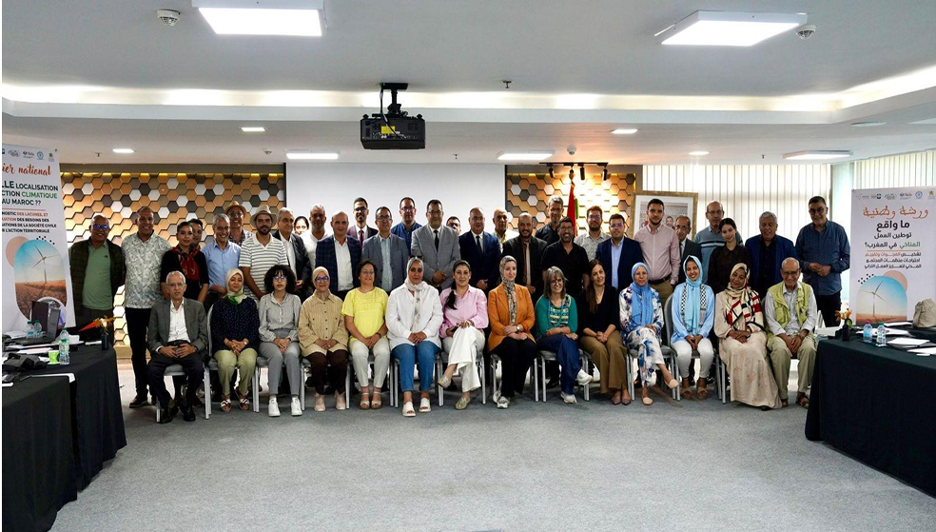
On June 12 and 13, AESVT and PACJA designated platform convened a national meeting aimed at enhancing the contribution of civil society organizations to the localization of climate action. The meeting brought together 62 participants from diverse regions of Morocco, including representatives from civil society organizations, local authorities, public institutions, universities, and international organizations dedicated to addressing climate change and promoting sustainable development.
This initiative focused on consolidating capacities within civil society, aiming to empower these organizations to play a more effective role in the design, implementation, and monitoring of local climate policies. The primary objectives were to identify the challenges faced by these organizations, assess their capacity-building needs, and develop a collective roadmap for advancing climate action at the local level.
The meeting was characterized by strong participation and high-level institutional presence. Notable figures in attendance included Mr. Rafik Belkorchi, Vice-President of the Tangier-Tetouan-Al Hoceima Regional Council, as well as representatives from key agencies, including the Ministry of Energy Transition and Sustainable Development and the United Nations Development Programme (UNDP).
The inaugural day began with opening sessions moderated by Mr. Ahmed Amezghal, the National Coordinator of the Climate Energy Hub of AESVT Morocco and the PACJA Designated Platform Morocco. The session featured presentations that highlighted the essential role of civil society organizations (CSOs) in translating climate policies into local actions. Mr. Saïd Chakri, representing PACJA Morocco, emphasized the significance of these organizations in driving territory-specific climate initiatives, while Mr. Belkorchi underscored the strategic importance of local authorities.
Subsequent sessions addressed strategic planning and the various sectoral pillars necessary for effective climate action. Presentations by government officials, including Ms. Naïma Oumoussa from the Ministry of Energy Transition and Sustainable Development, focused on opportunities available under Morocco’s Nationally Determined Contributions (NDC) to bolster climate action localization.
Significant insights were shared by Ms. Badia Sahmi, National Coordinator of the Global Environment Facility Small Grants Programme, who discussed UNDP’s support for local climate initiatives. Mr. Rabie Khamlichi, Director General of the Tangier-Tetouan-Al Hoceima Regional Council, presented the region’s experiences in localizing climate policies. The day concluded with an engaging question-and-answer session that allowed participants to explore the challenges of territorializing climate action, particularly related to local community needs and the role of civil society in monitoring policies. The discussions fostered an enriching exchange of experiences and insights, paving the way for collaborative efforts in addressing climate challenges.
The second presentation was led by the Moroccan Agency for Energy Efficiency (AMEE), which outlined the main mechanisms for integrating energy efficiency into local and regional policies. Their presentation highlighted the strategic role of energy efficiency in reducing greenhouse gas emissions, controlling energy consumption, and supporting local and regional authorities in their transition to a low-carbon economy.
As Morocco navigates the complexities of climate change, the outcomes of this meeting are expected to play a crucial role in shaping future activities and initiatives focused on localizing climate action throughout the Kingdom.
In closing the two-day meeting, Mr. Lemaadni Boughaleb, President of AESVT Morocco, emphasized the need to strengthen the capacities of civil society organizations to support local and regional climate policies. This national meeting represented an important step in the process of localizing climate action in Morocco. It strengthened synergies between public institutions, local authorities, technical partners, and civil society organizations around a shared vision based on cooperation, participation, and climate governance.
Beyond technical exchanges, this meeting confirmed the collective commitment to making civil society a strategic player in the climate transition, capable of contributing effectively to the implementation of public policies and supporting territories toward more resilient, inclusive, and sustainable development.