
From Landslide to Land Restoration: a case of change in West Pokot

Africa and Europe Deepen Climate Diplomacy Ahead of COP32
June 17, 2026
OUTCOME NOTE – Third AEF-AUC-ECA-PACJA Africa-Europe Informal Climate Convening
June 25, 2026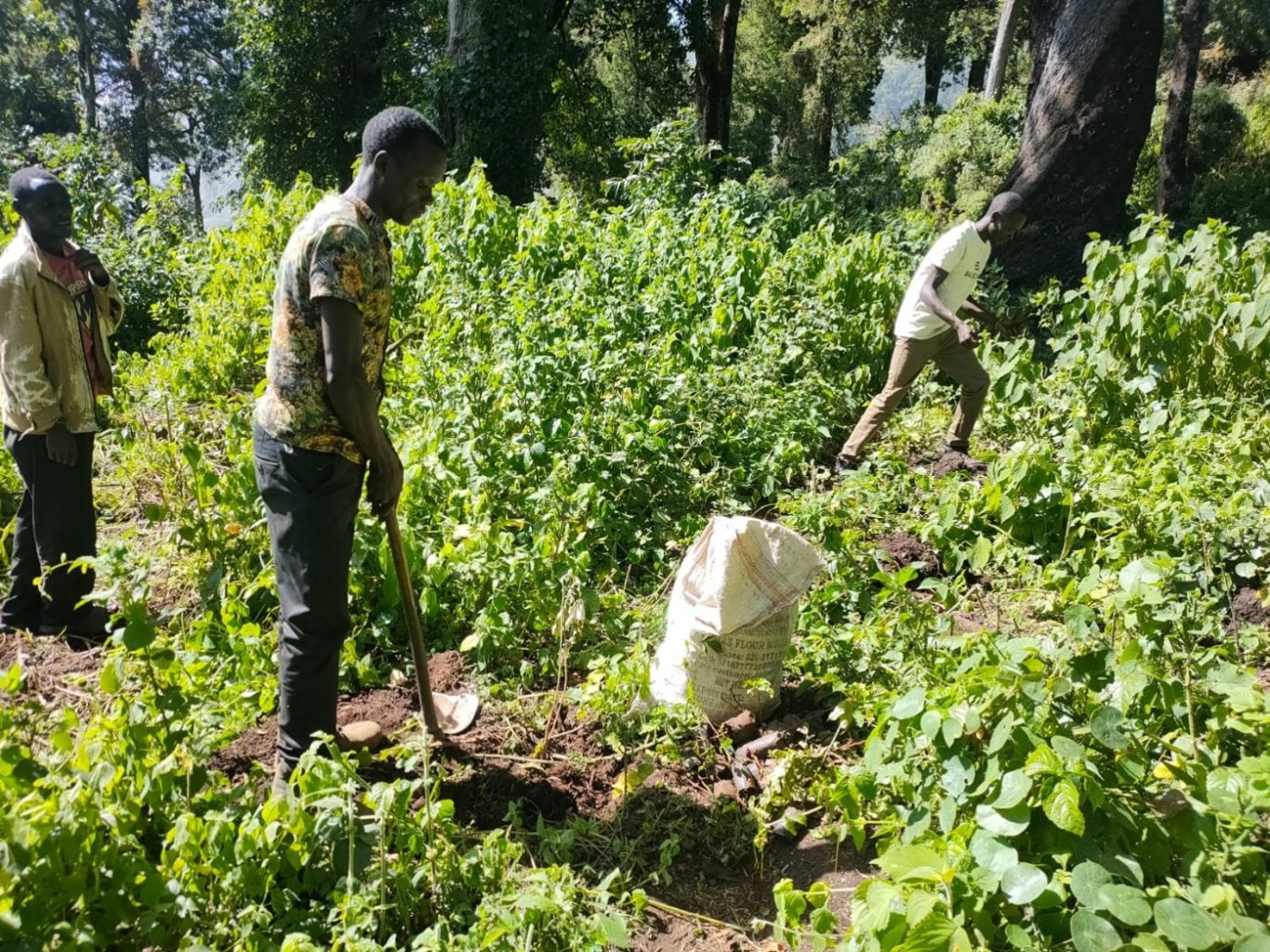
From landslide environmental disasters and forest degradation to sustainable agroforestry practices and natural forests rehabilitation, the sound success story comes from communities, including farmers and other local groups, confirming the change in West Pokot.
For years, the region has been characterised by extreme rainfall and landslides as well as prolonged drought patterns that have affected the community.
Through the adoption of agroforestry practices, by supporting planting of farm-friendly tree species such as Grevillea, growing of fruit trees to improve livelihoods and nutrition, as well as promoting forest site rehabilitation to mitigate the effects of climate and improve the forest cover.
The region has been affected for years
Previously, the area had suffered immense encroachment of the three major forest sites of Kapkoris, Karas and Parua pennon within West Pokot County as a result of increased demand for land and forest products, leading to depleted vegetation and consequently environmental degradation.
There was significant pressure on existing farmlands, which resulted in over-cultivation, the clearing of vegetation and tree cover, and the encroachment upon forested areas. Over time, this led to soil erosion, a decline in crop production, and ultimately caused one of the worst environmental disasters in the region. In 2019, a devastating landslide occurred, claiming the lives of over 17 people and destroying property valued at millions.
The area has experienced severe degradation due to the destruction of forest cover. Increased pressure on farmland has led to over-cultivation, resulting in a decline in crop production, soil erosion, and a loss of livelihoods. This situation has culminated in environmental disasters, such as the landslides in 2019 that claimed several lives.
The few remaining forest areas have also faced significant encroachment due to higher demand for farmland and forest products, like timber and firewood.
Women and children have been the most affected, given the social and cultural dynamics of the community. Men primarily work as cattle herders and often spend long periods searching for fresh grazing lands, leaving women and children to deal with the serious environmental challenges at home.
The major consequences of these issues included a decline in crop production, malnutrition, and ultimately poverty. An elderly woman from the community noted, “About twenty years ago, an acre of land without the use of fertilisers would yield about 27 bags of maize, but now it has dropped to between 8 and 13 bags.”
Towards lasting solution to the problem
PACJA, with support from Terrafund AFR100 and in partnership with key stakeholders such as the West Pokot County government and the local community, initiated several important actions:
- Community mobilisation, sensitisation, and training on the causes, effects, and mitigation strategies for climate change.
- Mapping and identifying key areas for project implementation, particularly degraded forest sites that require immediate rehabilitation.
- Identifying farmers to participate in agroforestry tree-growing initiatives.
- Conducting mass tree planting and rehabilitating the identified degraded forest sites within the county.
- Training and supporting farmers in cultivating fruit trees, such as grafted avocados and mangoes, as well as distributing farm-friendly trees like Grevillea to promote agroforestry and help control soil erosion.
Since the project was initiated, the tremendous progresses have been registered. At least a total of 68,133 indigenous tree seedlings has been planted across the degraded forest sites of Karas, Kapkoris and Parua Penon forests in West Pokot County.
Additionally, farmers have been supported with 40,200 on-farm friendly Grevillea tree seedlings to assist in soil erosion control, increase green cover, as well as improving crop productivity.
In an attempt to promote and improve local community livelihoods, farmers have also been supported with 11,000 fruit tree seedlings comprising Mangoes and avocados, from which they are able to feed their families as well as earning an extra income from the sale of any excess fruits. This is projected to help meet the nutritional needs of the community as well as alleviate poverty as a source of additional income.
The project also supported the rehabilitation of degraded forest sites which saw planting of indigenous tree seedlings across the three forest sites of Karas, kapkoris and Parua penon forests respectively.
As a result of these interventions, there has been reduced incidences of landslides as well as an improvement in crop yields and livelihoods improvement.
There has been an increase in the forest cover which in the long run will help mitigate the effects of climate change.
Remarkable achievement is visible and the journey continues
Since the intervention clear changes are observed including the improved crop harvest due to efforts to reduce soil erosion and enhance soil fertility, increased vegetation cover leading to more reliable rainfall patterns, which supports farming activities and proves farm yields.
The project has not only achieved a lot in hardware impact, but also in software achievements. The greater awareness of the local community regarding the cause, effects, and mitigation of climate change.
Click here to download the article