“ENOUGH IS ENOUGH”, Declared African Civil Society As The SB64 Negotiations Are Coming To A Close.

PACJA and Amazonian Organizations Join Force For Climate Justice
June 15, 2026
Africa and Europe Deepen Climate Diplomacy Ahead of COP32
June 17, 2026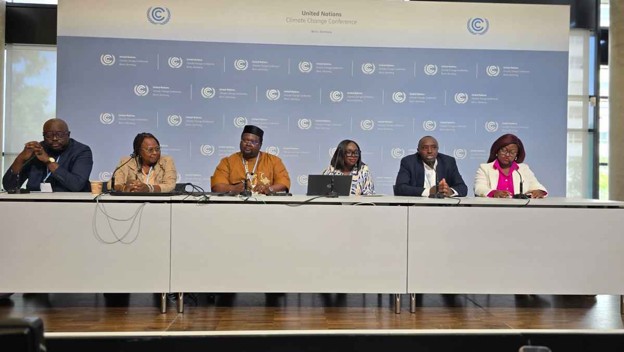
African Civil Society, coalesced under Pan-African Climate Justice Alliance (PACJA) and other Global South allies, convened a press conference to express their concerns as the 64th Subsidiary Bodies’ negotiations nearly draw to an end in Bonn, Germany.
The June Climate Meetings began on June 8 and will conclude on June 18, 2026. During the second week of the meetings, the African civil society delivered a powerful message, which was shared with the media in Bonn. They emphasized that critical agenda items are being overlooked, undermining the hopes of African communities that are facing severe impacts from climate change.
“Enough is enough, Swing to Action Now”, read the press statement.
Ms. Grace Ampoma, representing Abantu for Development in Ghana, stressed that the Belem Gender Action Plan remains impossible to implement without resources. The slow pace of negotiations prolongs insecurity for African women facing direct climate impacts, Grace reiterated.
As current geopolitical turmoil continues to divert attention from climate issues, Juliet Nangamba from Akinamama wa Africa in Zimbabwe emphasised the interconnectedness of the climate crisis with geopolitical challenges facing African communities.” “We need accessible, timely, grant-based, flexible climate finance that directly reaches women, indigenous peoples and local communities”, she stated.
African civil society described the process as similar to a convening of consultations, highlighting that important issues such as climate finance were consistently sidelined. Melissa Jimenez Gomez Tagle from the Children and Youth Constituency, known as Youngo, emphasised the need for tripled adaptation finance and effective measures to address Loss and Damage.
The UN National Oceanic and Atmospheric Administration forecasts a devastating El Niño event, with sea surface temperature anomalies potentially exceeding 2 degrees Celsius. This phenomenon threatens frontline communities, including youth, indigenous populations, and smallholder farmers, with severe floods, droughts, loss of livelihoods, and potential loss of life.
Gertrude Kenyangi, representing the farmers’ constituency in Uganda, commented that many agriculture-related initiatives and declarations are led by Northern countries, often excluding African stakeholders from the decision-making processes. This is concerning given Africa’s high vulnerability to climate issues despite its low emissions. She advocated for emphasizing qualitative issues, such as human rights, gender equality, and climate justice, as central to these discussions.
Dr Mithika Mwenda, Executive Director of PACJA, described the current negotiation as the low moment for the multilateral process before concluding that “PACJA remains optimistic, believing that the multilateral process will succeed through the efforts of allies’ health”.
Read the press statement read in the press conference convened by PACJA ( second -SB64 PRESS CONFERENCE )